For much of modern history, LGBTQ+ individuals have served in militaries around the world—often in silence, secrecy, or defiance. In the United States, the journey from criminalization to inclusion has been long and fraught, shaped by shifting cultural norms, political pressures, and presidential leadership.
A Legacy of Exclusion and Evolution
Early 20th Century to WWII
Homosexuality was criminalized in the U.S. military as early as 1916, when the Articles of War listed “assault with intent to commit sodomy” as a punishable offense. By 1920, even consensual same-sex acts were criminalized. This policy persisted under the Uniform Code of Military Justice (UCMJ), established in 1951, which explicitly banned “unnatural carnal copulation.”
Despite these laws, World War II paradoxically created space for queer identity. The massive mobilization brought LGBTQ+ individuals together in homosocial environments far from home, fostering early queer networks and bar scenes in cities like San Francisco and New York.
Cold War and the Lavender Scare
The postwar period saw a harsh crackdown. During the Lavender Scare of the 1950s, thousands of federal employees and military personnel were discharged for suspected homosexuality. The military viewed LGBTQ+ individuals as security risks and moral threats.
🛑 “Don’t Ask, Don’t Tell” (1993–2011)
In 1993, President Bill Clinton introduced Don’t Ask, Don’t Tell (DADT) as a compromise: LGBTQ+ individuals could serve, but only if they remained closeted. While it ended the outright ban, it led to over 13,000 discharges during its 18-year run and reinforced a culture of silence and fear.
✅ The Obama Administration: Repeal and Recognition
President Barack Obama played a pivotal role in advancing LGBTQ+ rights within the military. In 2010, he signed legislation to repeal DADT, which officially took effect in 2011. This allowed gay, lesbian, and bisexual individuals to serve openly without fear of discharge based on their sexual orientation.
In 2016, the Obama administration further expanded inclusion by lifting the ban on transgender individuals serving openly in the military, marking a historic step toward full equality in the armed forces.
❌ The Trump Administration: Reversal and Restriction
In 2017, President Donald Trump announced via Twitter that transgender individuals would no longer be allowed to serve “in any capacity” in the U.S. military. This policy was formalized in 2019, restricting service for many transgender individuals unless they served in their sex assigned at birth and did not seek gender-affirming medical care.
The move was widely criticized by LGBTQ+ advocacy groups, medical professionals, and military leaders who had supported the inclusive policies of the previous administration.
🔁 The Biden Administration: Restoration and Affirmation
Upon taking office in 2021, President Joe Biden swiftly reversed the Trump-era ban. He signed an executive order restoring the ability of transgender individuals to serve openly in the military, reaffirming the principle that “all Americans who are qualified to serve in the Armed Forces of the United States should be able to do so.”
The Department of Defense under Biden has also emphasized diversity, equity, and inclusion, recognizing LGBTQ+ Pride Month and supporting service members through updated training, healthcare access, and anti-discrimination policies.
🚫 Trump’s Second Term: Renewed Restrictions on Transgender Service
In his second term, President Donald Trump reinstated and expanded restrictions on transgender military service. In early 2025, the administration issued a new directive banning individuals diagnosed with gender dysphoria, or those who had undergone gender-affirming medical treatment, from serving in the U.S. military.
The policy, framed as a matter of “military readiness,” was widely criticized as a de facto blanket ban on transgender service. The Supreme Court allowed the policy to take effect while legal challenges proceed, forcing many transgender service members to choose between voluntary separation or facing discharge. This marked a significant rollback of the inclusive policies established under the Obama and Biden administrations.
🌍 Global Comparisons: How Other Militaries Stack Up
- United Kingdom: Banned LGBTQ+ individuals until 2000. Now a leader in inclusion, with active participation in Pride events.
- Canada Lifted its ban in 1992. Offers strong anti-discrimination protections and inclusive healthcare.
- Israel: Allows openly gay and lesbian individuals to serve in all branches, including elite units.
- Russia & 🇨🇳 China: Maintain restrictive or ambiguous policies. Russia classifies homosexuality as a mental disorder in military guidelines.
👩⚕️ Women and the Fight for Inclusion
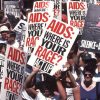
Throughout history, lesbian women and allies have played crucial roles in supporting LGBTQ+ service members. During the AIDS crisis, lesbian nurses and caregivers stepped in when others would not. Women also led legal battles and advocacy efforts to challenge discriminatory policies and support queer veterans.
🕊️ Conclusion: Progress with Purpose
The journey toward full inclusion in the U.S. military has not been linear. It has been shaped by the values and decisions of each administration, the courage of LGBTQ+ service members, and the advocacy of those who support them. While challenges remain, the progress made in recent decades is a testament to the resilience of a community that continues to fight for dignity, equality, and the right to serve.